Blogs
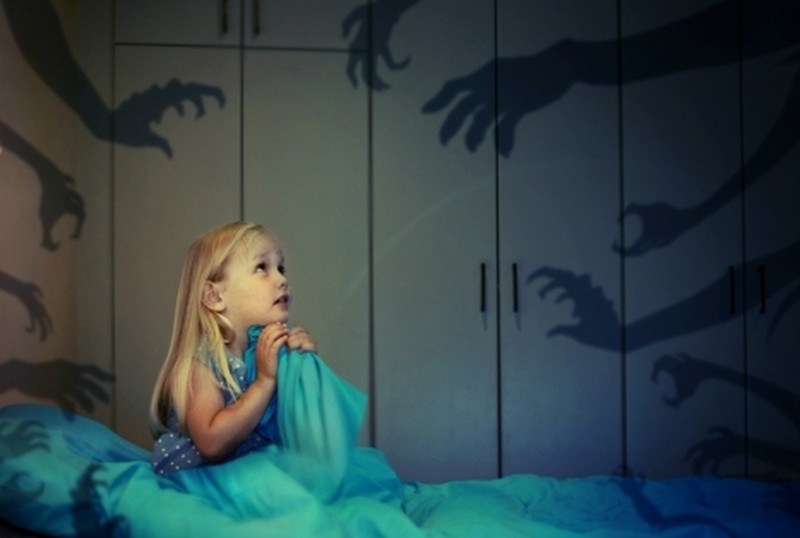
Children's Fears and What to Do About Them. Top 3 Methods.
There can be many, or just one, the important thing is that the mechanism is always the same. If the brain for some reason perceives information about the environment as a threat, the body always starts to react. Along with nerve signals, stress hormones are released into the blood, and the body switches to combat readiness mode:
- Increased heartbeat, breathing, and peristalsis
- Abdominal pain may occur
- Feeling of nausea and even diarrhea
Also read: If You Have "Psychosomatics". Top 3 questions you need to answer yourself. .
Thus, the brain informs the body: "Run and hide!" Unfortunately, it does not always act rightly. And it's something that needs to be discussed with children. Phrasing can be as follows:
- "It's normal to be afraid, everyone is afraid, even adults, being afraid is not shameful".
- "Fear helps us, fear takes care of us, otherwise we would constantly get into trouble if we weren’t afraid of anything"
It's important for the child to understand that fear is a protective function of the body, just a hint, not a directive to action.
Initially, young children have almost no fears. Infants have elementary reflexes (startle) to loud sounds, a reaction to pain (crying), and a predisposition to fear reactions to some things that might be dangerous in life (heights, insects, etc.). Fears appear as a result of learning. The more anxious the parents, the faster they teach to be afraid: "This is scary!". It’s scary to stay alone, scary to go outside in the evening, scary to trust people…
Also read: Childhood trauma, like a tattoo on the body and how to live with it..
This is how nighttime fears, fear of darkness, school, mistakes, and many others appear. If you find that your child has fears, before asking them suggest:
- Play. At home, you will always find a variety of props: a house made of large cubes, a bed, a table, a cupboard; various animals; fir trees imitating a forest, a broom supposedly left by Baba Yaga; a drum, a tank, a robot; cloth dolls worn on the hand, ordinary dolls representing people, animals, and fairy tale characters; objects from the doctor's office, etc. And be attentive - the attitude to items will manifest through facial expressions, stiffness, tension, avoidance of characters or items will indicate the child's fears. After identifying fears, play dynamic games with the child like ball throwing, bowling, etc. All this creates a cheerful emotional atmosphere that opposes the atmosphere of fear. Afterward, be sure to note the children's successes, praise them and suggest they draw their fears, saying: "Draw what you are afraid of, each fear on a separate sheet".
- Draw. It is important to comment that drawing fears will help overcome them and it doesn’t matter how they are depicted, the main thing is to draw them all without exception using markers, paints, or colored pencils. It's best to draw independently, without adult assistance. The very act of receiving a task organizes the child and mobilizes them to fight their fears.
Analysis of drawings. After viewing each drawing, ask the child to talk about their fear, specify it and then ask: "You have drawn this fear, now tell me, are you afraid of it or not?" Later the phrase gradually shortens to: "Afraid or stopped?" and towards the end it sounds like: "Afraid - no?" All words should be pronounced in a steady, but not monotonous and even more so unhurried voice, as if with a hint of "fear is defeated".
If the child coped with the fear, the drawing can be destroyed in any way the child chooses - torn, burned, drowned, etc. With the child's consent, you can role-play some of the just-removed fears, say, jumping off the table, crawling through several chairs, reproducing the setting of a dentist’s office, etc.
If the fear is not yet overcome, you can suggest to the child: "Now draw it so that it’s clear you are not afraid?" This implies that you need to draw not only the object of fear, as the first time, but also definitely yourself not being afraid. For example, not the child running from Baba Yaga but her from him; he no longer cries from pain; fights with Dragon/Dinosaur/Monster/Ghost, etc.; sails on water or flies on an airplane, etc.
- Create a story. Also remaining fears, usually no more than 15%, can be played out through stories authored on their topic with a "happy end".
Every fear has its reasons and any fear can be gotten rid of, sometimes only with the help of a child psychologist.
Also read: Psychologist on-line, what is it? .
It’s important for parents to accept the fact that a child’s fear is a reflection of what is happening around them. And this means it is time to harmonize family relationships, neutralize conflicts, and teach the child to be brave and confident in their abilities. Because self-confidence equals success. And that's exactly the kind of future we wish for our children.
iPsycholog - Your psychologist online.
How to order a free consultation with a psychologist



Fathers and daughters

The 1st of September is coming soon. Top 3 ideas for adapting to a new team.

When Your Child is a Troubled Teenager: How to Maintain Relationships.
Once upon a time, on a fine day, any child, even the most well-behaved, pleasant, sweet, kind, responsive, and hug-loving one, turns into a "thorn" and in both the literal and figurative sense, expels the recently dearly loved parents from their space. And this can certainly be confusing and sometimes just infuriate the parents.

«Моя жизнь – моя ответственность и только я выбираю…»